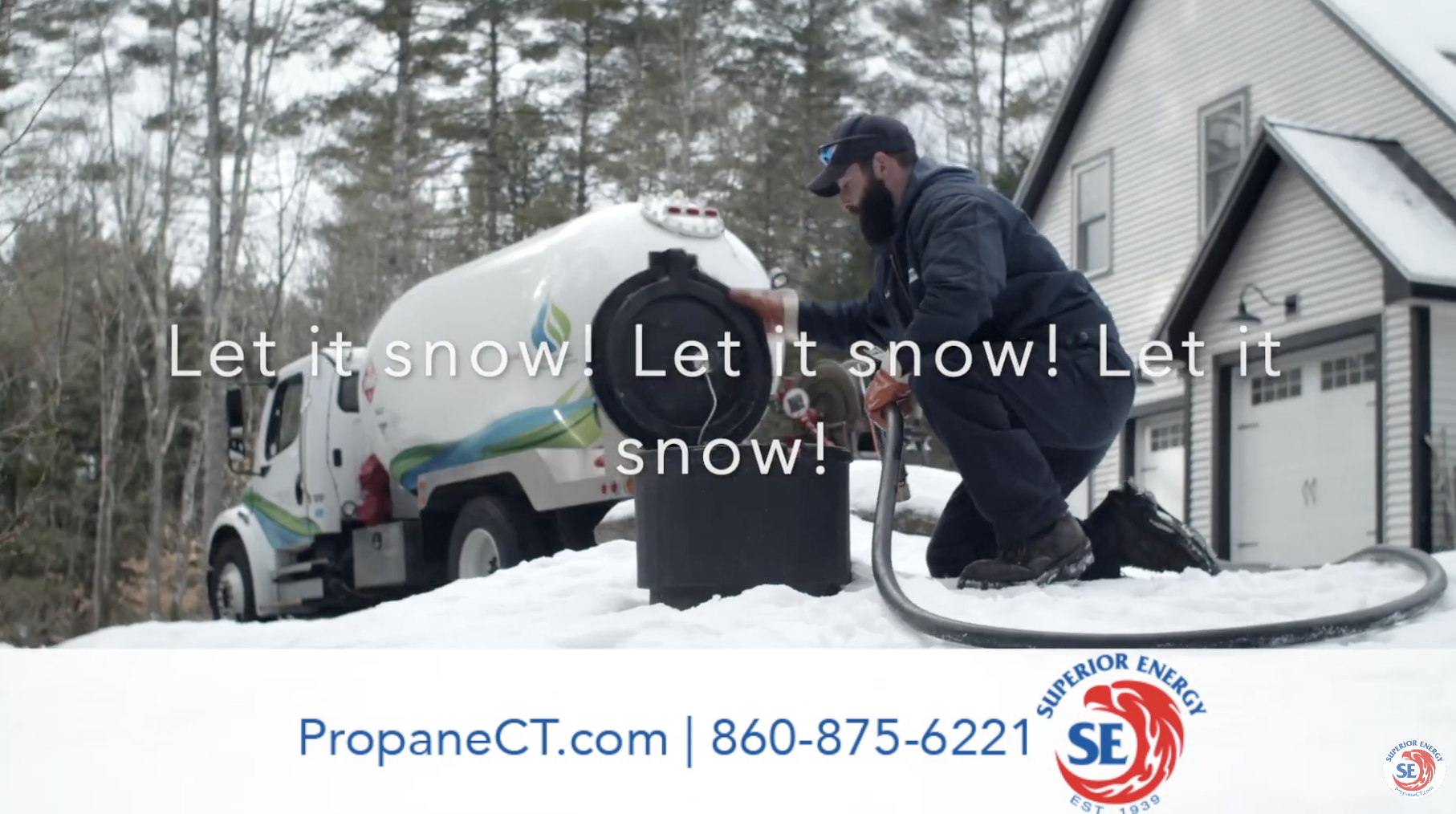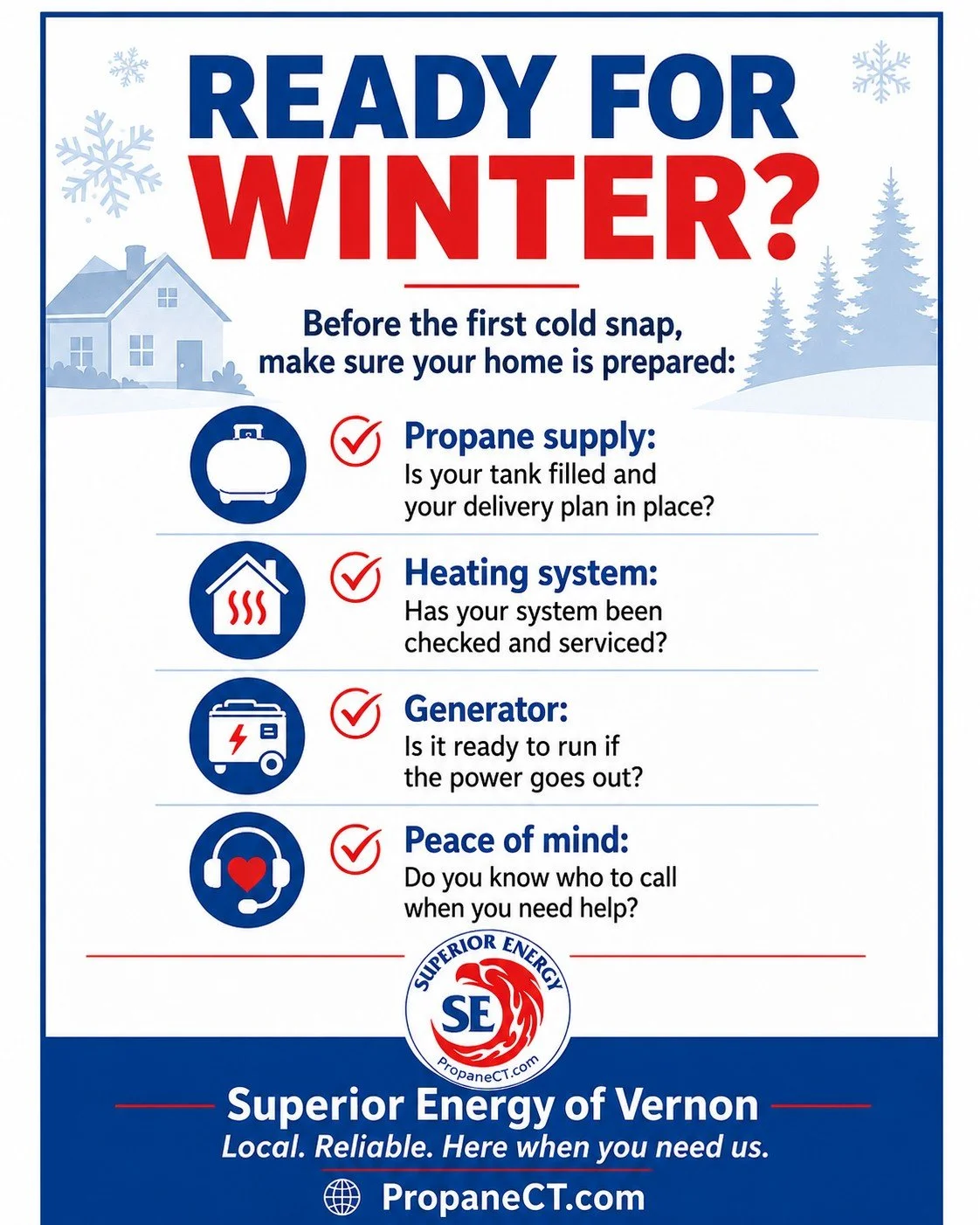
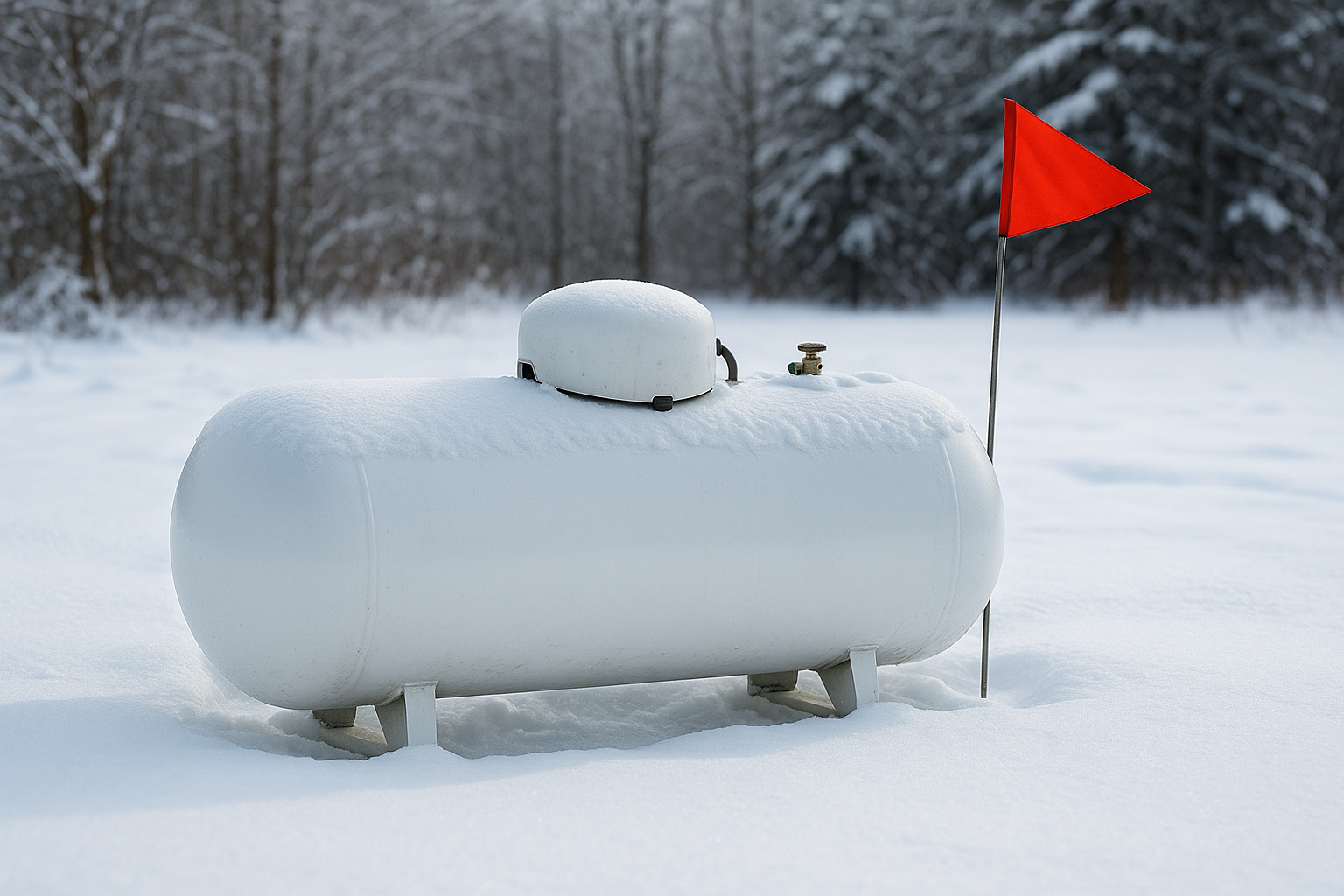
Snow, ice, and freezing temperatures can put extra stress on your propane system. By taking a few proactive steps, you’ll help keep your home safe, maintain reliable heat, and ensure your propane provider can deliver fuel without delays.
Below are the 5 key winter safety practices so you can stay prepared all season.
1. Plan Ahead Before the Snow Season
Before the first major snowfall:
Flag your tank’s location with a tall marker.
Walk your property and identify hazards for snow removal crews.
Inform driveway/plow contractors to avoid pushing snow toward the tank.
Consider enrolling in automatic delivery to avoid dangerous and costly run-outs.
2. Maintain Clear Access for Deliveries
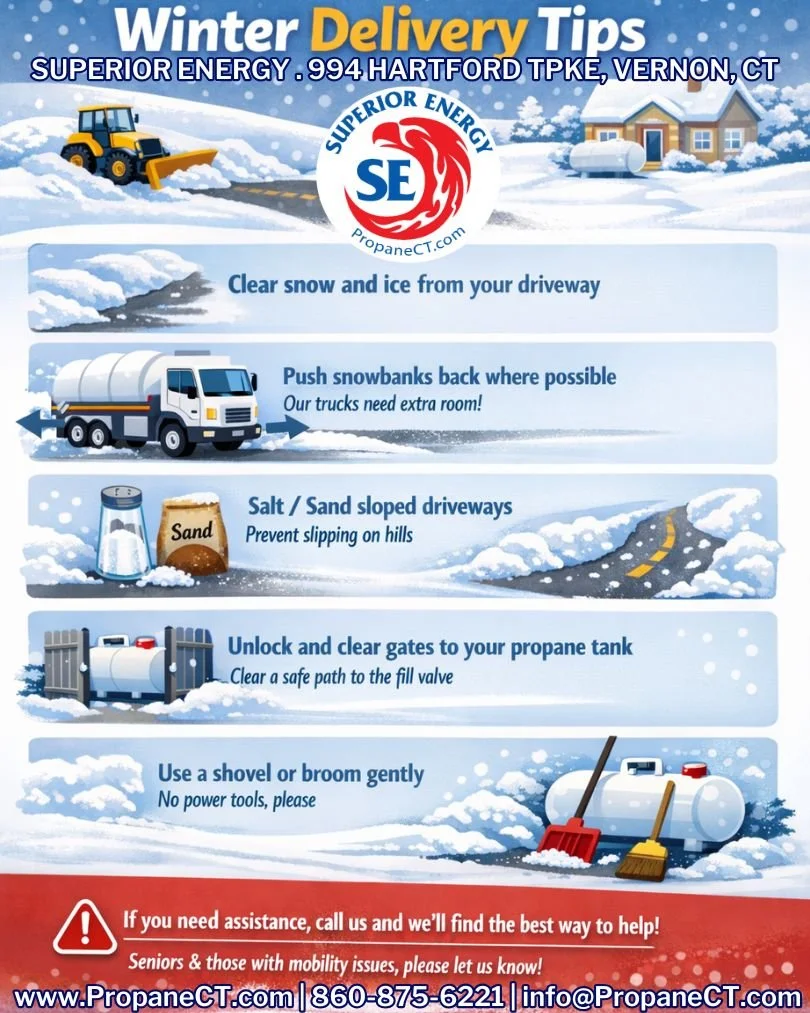
Propane delivery trucks require safe, unobstructed access to your tank—especially after a storm.
Best practices:
Clear walkways, driveways, and the area around your tank.
Make sure snowbanks aren’t piled against the tank or fill pipe.
If you’re away when a delivery is scheduled, arrange for someone to shovel before the truck arrives.
3. CLEAR SNOW & ICE FROM TANKS THE RIGHT WAY: GENTLY
Snow and ice don’t just hide your tank; they can block important components and cause unsafe pressure buildup.
Avoid this:
Using shovels, metal tools, or anything sharp near the tank.
Kicking or chipping ice off the tank (can damage valves or regulators).
Do this:
Brush off snow from the tank, access path, valves, and fill pipe using a broom or your hands.
Keep all appliance vents, regulators, and chimneys free from snow or ice.
Mark the tank with a tall, brightly colored stake/flag before heavy snowfall.
4. Monitor Fuel Levels & Refill Early
Winter propane usage rises sharply with heating, fireplaces, and backup generators. Don’t wait until your tank runs low—running out mid-winter can disrupt service and trigger safety protocols.
Safety guideline:
Schedule a refill when your tank reaches 30%.
Extra tips:
Track usage during cold spells, holidays, or generator operation.
Consider automatic deliveries or tank monitoring for worry-free service.
5. Keep Vents & Equipment Clear
Proper ventilation keeps equipment running safely and efficiently.
Make sure:
All vents and chimneys are unobstructed and not buried under drifts.
Regulators and valves are visible and free from ice buildup.
No propane cylinders are stored indoors, garages, or enclosed spaces.
Blocked ventilation increases the risk of carbon monoxide buildup—always a top winter safety concern.
Why These Steps Matter
Snow and ice aren’t just an inconvenience—they can:
Hide valves and regulators
Block ventilation
Cause ice buildup that damages equipment
Prevent timely service or emergency access
Increase safety risks if leaks occur
These few simple habits can help protect your home, your family, and your peace of mind all winter long.
Our skilled team includes specialists in both electrical and heating. Contact us to ensure that your propane system and appliances are ready for any weather and are in tip-top shape.
Now we can safely sing, Let it snow!