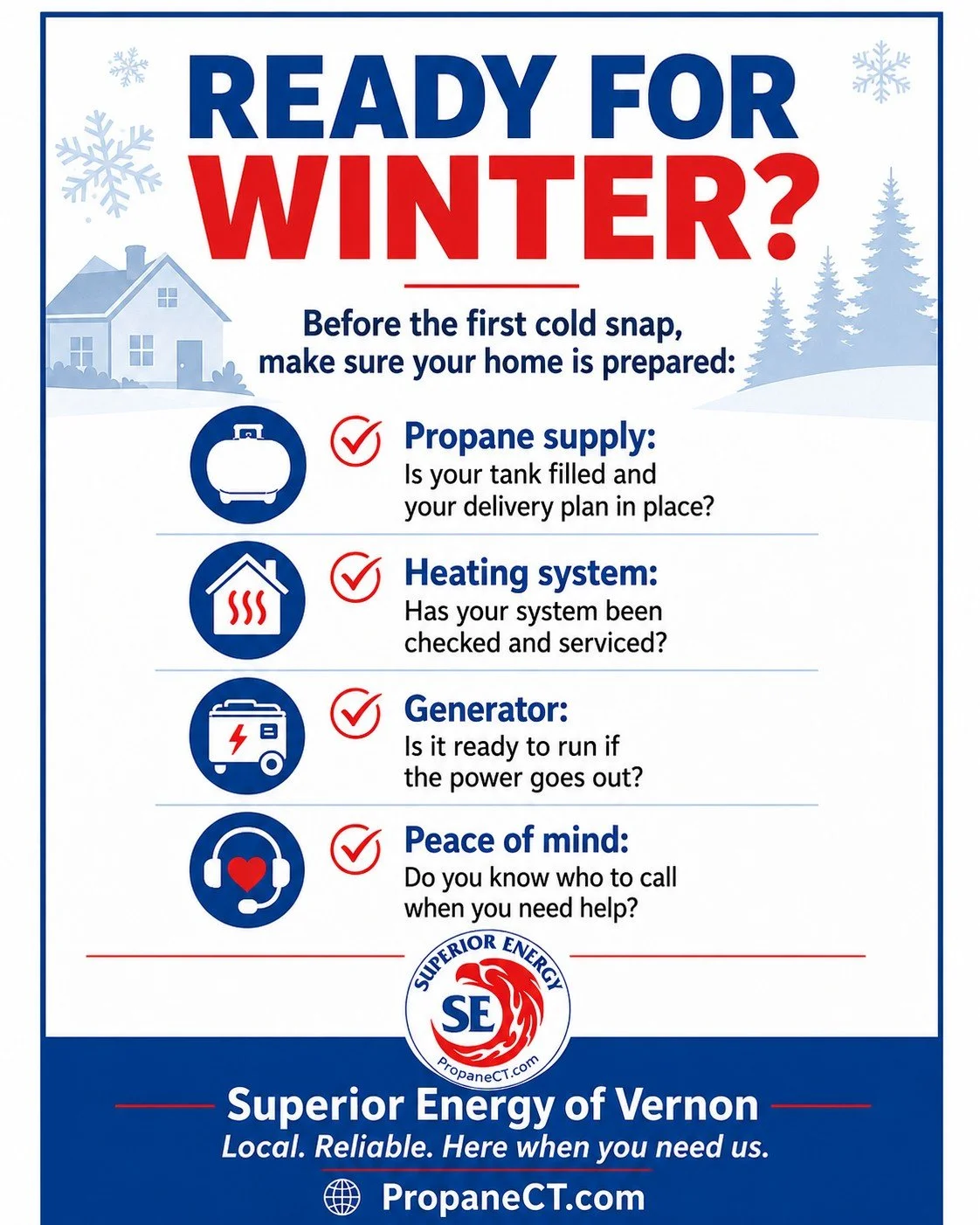
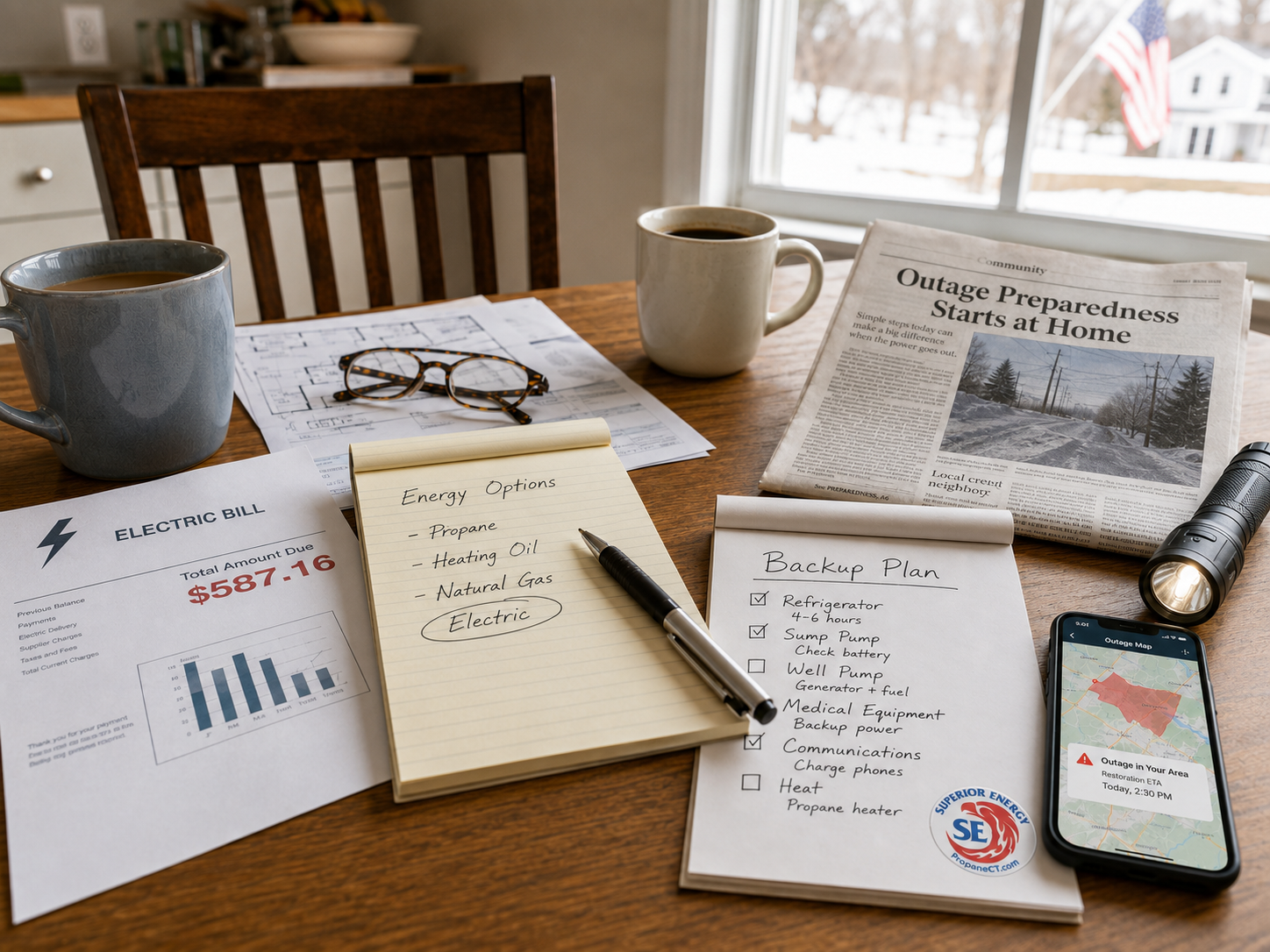
Outages, grid strain, rising costs, and new building rules raise a practical question: how prepared are we?
The Fourth of July is supposed to be about cookouts, fireworks, family, and freedom.
But for many Connecticut families this year, storms changed plans quickly.
Severe weather brought down trees and wires, disrupted roads, and left about 100,000 utility customers without power across Connecticut. For families dealing with dark homes, spoiled food, flooded basements, medical-equipment concerns, or uncertainty about when power would return, energy resilience was not abstract.
It was immediate. It was personal.
Across Connecticut and the Northeast, people are hearing more about electrification, building codes, climate policy, rate increases, and the future of heating and power.
Those conversations matter. But storms have a way of cutting through theory.
When the grid goes down, families do not need slogans. They need refrigeration, heat, water, communication, sump pumps, medical equipment, and a plan.
Preparedness is not political. It is practical.
Reliability and Affordability Belong Together
Recent outages showed how quickly the electric grid can be disrupted. At the same time, electric costs remain a major concern across the state.
Eversource wants to raise Connecticut electric bills by about 11 percent on average. If regulators approve it, the increase will likely start in July 2027.
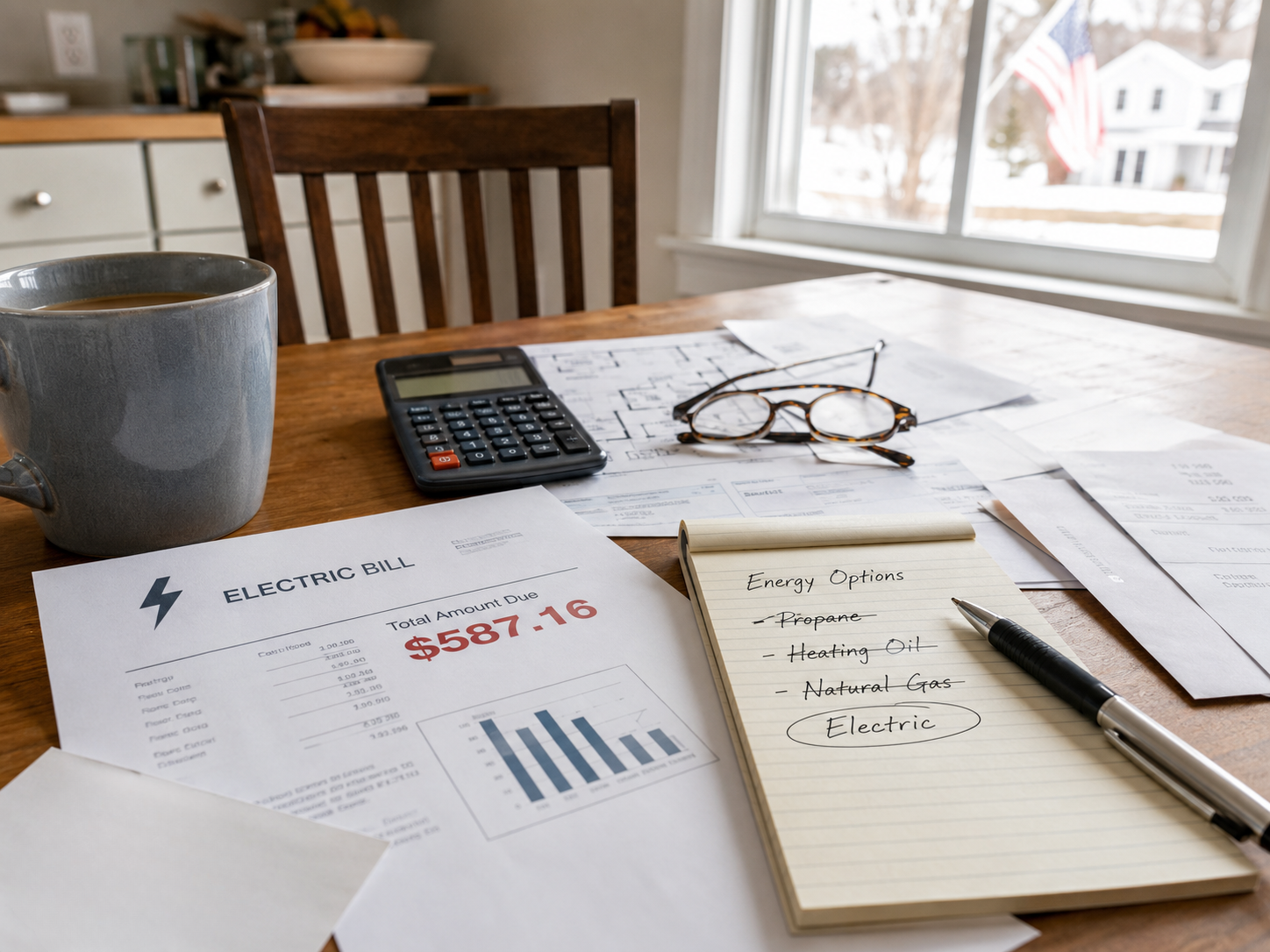
That matters because households are being asked to rely on electricity for more of daily life: heating, cooling, appliances, vehicles, backup systems, and more.
That may be right for some homes and businesses.
But if we ask the grid to do more, we also need to ask what happens when it cannot.
The Preparedness Gap
National research shows the same preparedness gap.
The Propane Education & Research Council recently found that only 26 percent of homeowners have a backup-power system. Among businesses, 72 percent have some form of backup power, but only 13 percent say it protects their entire operation.
A good energy plan starts with practical questions:
What needs to keep running if the power goes out? Is the home on a well? Is there a sump pump? Are there medical needs? Is there enough fuel storage? Is the generator properly sized and maintained?
Those are not political questions. They are household questions. Business questions. Safety questions.
Storms are not the only pressure on the grid. When air conditioners run hard, demand rises, the grid works harder, and homes and businesses may face reliability concerns and higher peak-demand costs.
Propane-powered backup systems, on-site generation, microgrids, and combined heat and power systems already give homes, farms, and businesses another layer of control.
So why is propane so often left out of the policy conversation, or lumped together with fuels that do not serve communities in the same way?
Maybe because energy debates are easier when everything fits into neat categories: clean or dirty, old or new, good or bad.
But real life is rarely that simple.
Policy Decisions Have Practical Consequences
The debate over energy choice is not limited to Connecticut.
New York State has enacted a statewide law prohibiting fossil-fuel equipment and building systems, including natural gas, propane, and heating oil, in many new homes and buildings.
This is not just a New York City policy. It applies statewide and affects energy choices in rural and upstate communities as well.

The law includes exemptions for agriculture, manufacturing, hospitals and medical facilities, commercial food establishments, emergency backup power, and cases where the electric grid cannot provide reliable service.
Those exemptions matter because they acknowledge what broad mandates often miss: real life does not fit neatly into one policy category.
But for many families building or buying new homes, the law can still limit the freedom to choose the energy option that best fits their home, budget, location, and safety needs.
New York’s rules are still working through the courts, and the provisions are currently suspended. But the larger policy direction is clear, and it should concern anyone who believes energy policy needs to consider emissions, reliability, affordability, infrastructure, emergency backup, rural access, and consumer choice.
Resilience Requires Options
No energy source is perfect.
Solar panels, wind turbines, batteries, power plants, pipelines, and fuel systems all have tradeoffs.
Propane is not zero-emission when burned, but it is portable, storable, cleaner-burning than many traditional fuels, useful beyond natural gas pipelines, and valuable for backup power and resilience.
That is one of the biggest differences between propane and natural gas. Natural gas depends on pipeline access. Propane does not.
Propane also offers a practical environmental benefit many people do not know: when released, it vaporizes and dissipates instead of pooling like liquid fuels or contaminating soil and groundwater the way gasoline, diesel, or heating oil can.
A cleaner energy future should reduce emissions. It should also protect families, businesses, land, water, and communities when conditions are not ideal.
The goal should not be to crown one winner too early. It should be to build a cleaner, stronger energy system that works in real life.
Clean Energy Should Also Be Practical Energy
Energy policy should encourage more research and investment across all practical energy options, not fewer.
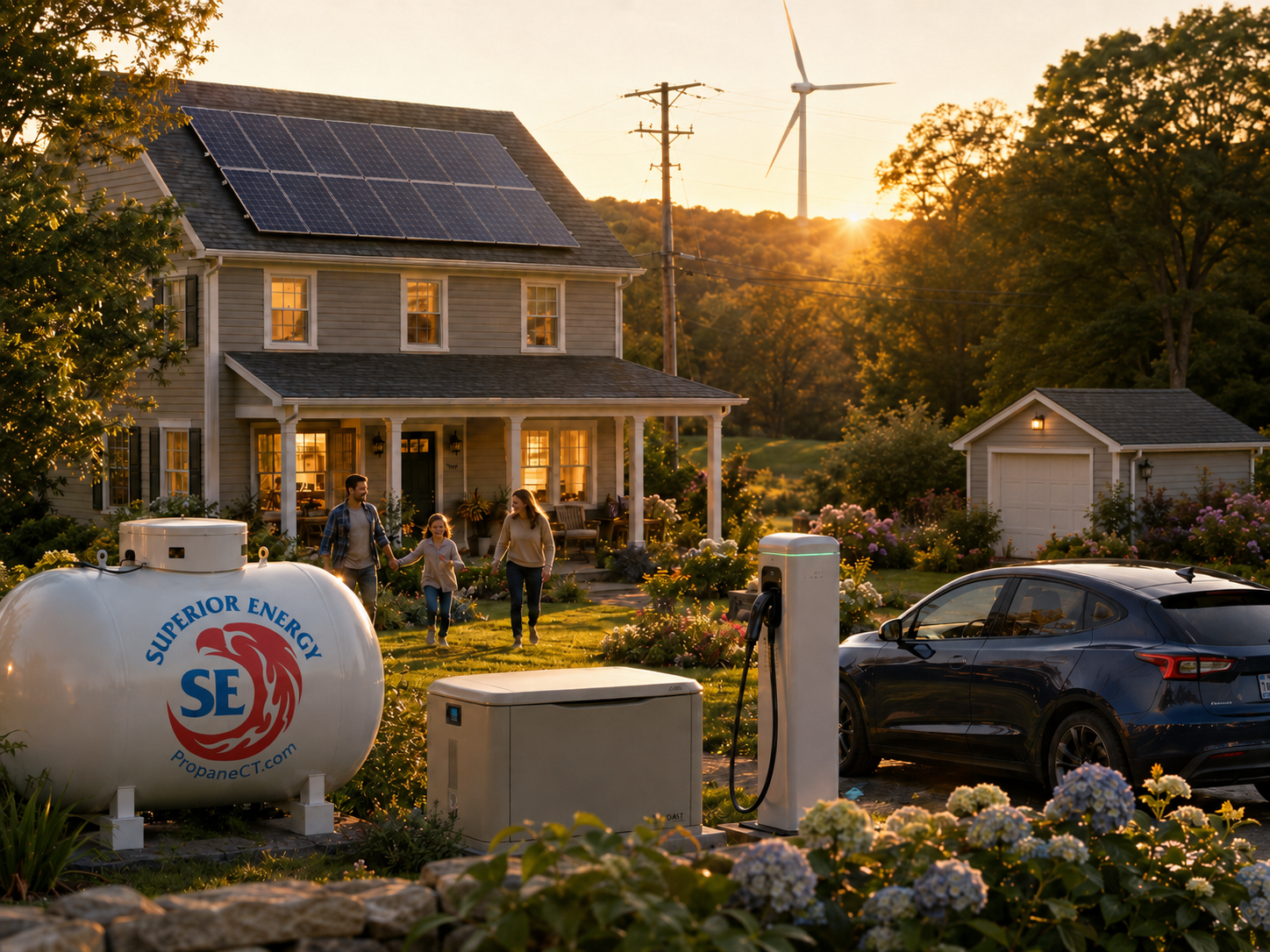
Electricity, renewables, battery storage, propane, renewable propane, biofuels, hydrogen, and other emerging technologies all deserve room to improve.
Renewable propane, made from materials such as plant oils, used cooking oil, and other waste fats and oils, can lower carbon intensity while working with much of the same equipment and infrastructure already in place.
That is another reason policymakers should be careful before writing off entire fuel categories.
Families and businesses should not be forced into a narrower energy future before the full picture has been considered. They should have more ways to prepare, more tools to build resilience, and more freedom to choose what works for their homes, budgets, and communities.
Preparedness is not about panic. It is peace of mind: knowing what needs to stay on, how it will be powered, and who you can call if something goes wrong.
Ideally, that means a local team that knows your home, your roads, and your community, even on a holiday weekend.
That is what energy security looks like in real life.
Planning for Backup Power in Connecticut?
Preparing for an outage starts with knowing what needs to stay on and how it will be powered.
Superior Energy helps Connecticut homeowners and businesses plan for propane service, backup power, generator readiness, and practical energy resilience.
Have questions about propane or backup power? Contact our local team at 860-875-6221.