
September is the best time to check the things no one thinks about until they stop working.
September has a way of sneaking up on us.
One minute, it still feels like summer. The grill is out, the windows are open, and no one wants to think about the first cold morning. Then all at once the calendar fills up: school, sports, work, travel, holidays, houseguests, and eventually, the heat has to come on.
The first really cold night arrives, and suddenly everyone remembers the furnace, the propane tank, the generator, the fireplace, the water heater, or that service appointment they meant to schedule in September.
And, of course, everyone remembers at the same time.
That is why September is one of the best times to plan for winter energy needs. It is early enough to check, service, schedule, and plan before cold weather turns a small inconvenience into an emergency.
The Boring Stuff Matters
Energy preparation is not very exciting.

Nobody takes a family photo next to a freshly serviced heating system. Nobody invites the neighbors over to admire a full propane tank. And we have yet to hear anyone say, “You know what would make this weekend perfect? Let’s test the generator.”
But these are exactly the things that matter when the weather turns.
Think about how much a house depends on energy once fall and winter arrive. There is heat, hot water, cooking, laundry, refrigeration, lighting, sump pumps, internet, home offices, medical equipment, and sometimes a generator.
Then add Thanksgiving.
The oven is full. Guests are taking showers. Someone is doing three loads of laundry. The refrigerator is packed. The fireplace is on. And somebody has decided this is the year to make six side dishes and a turkey recipe that requires adult supervision.
That is not the moment you want to discover a heating problem or realize you never checked the fuel level.
Know What Powers Your Home
Whether your home uses propane, electricity, heating oil, natural gas, or some combination, it is worth taking ten minutes now to think through what actually keeps the house running.

Ask yourself:
What heats the home?
What heats the water?
What happens if the electricity goes out?
Is there a well or sump pump?
Does someone work from home?
Does anyone rely on medical equipment?
If you have a generator, what does it actually power?
These are simple questions, but many homeowners do not think about them until something stops working.
If Your Home Uses Propane, Check Your Tank and Delivery Plan
If your home uses propane, one advantage is easy to overlook: the fuel is stored right on your property.
For customers who use propane for heating, hot water, cooking, fireplaces, dryers, or standby generators, on-site supply can support multiple parts of the home from a single stored energy source.
That matters during cold snaps, storm warnings, power outages, and busy holiday weeks.
Before winter arrives, make sure your propane tank level is where it should be, your delivery plan is in place, and your account information is current. If you call for deliveries manually, do not wait until the tank is low or the forecast looks dramatic.
Fall is also a good time for homeowners to ask whether their current energy plan gives them the service, reliability, and peace of mind they want before winter arrives.
A Generator Is Only as Good as the Plan Behind It
Generators give people a great deal of peace of mind, but simply owning one is not the same as being prepared.
Homeowners should know what their generator powers, whether it has been serviced, and whether the available fuel supply matches the way they expect to use it during an outage.
A propane standby generator can be especially convenient because it can connect to an on-site fuel supply and turn on automatically when utility power goes out.
For many families, the goal is not to live exactly as they would on a normal day. The goal is to keep the important things going: heat, refrigeration, water, sump pumps, lights, communications, and other essentials.
That difference matters.
Local Service Still Counts
We spend a lot of time today talking about technology, energy prices, equipment, and new ways to power our homes. Those are important conversations. But there is another part of energy security that does not get discussed enough: who answers the phone when something goes wrong?
When a heating system stops on a cold night or a storm knocks trees across local roads, service becomes very personal, very quickly.
At Superior Energy, we believe local businesses have an advantage here. We know the towns. We know the roads. We know that a house at the end of a long driveway may have very different needs from a house in the center of town.
Most importantly, when someone calls because they have no heat, they are not looking for a lecture about energy policy.
They want help.
September Is the Easy Month
The easiest winter service call is the one you never have to make.
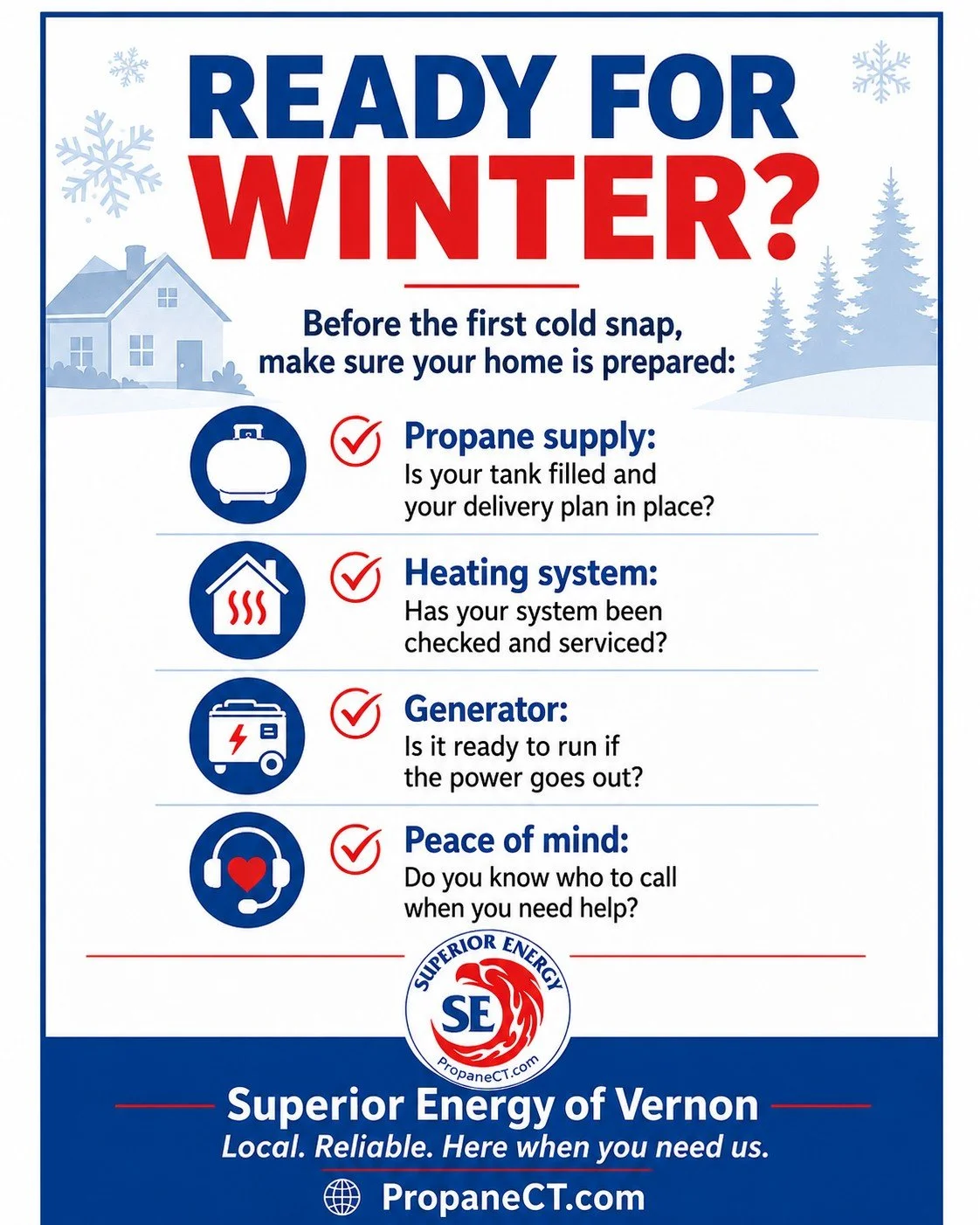
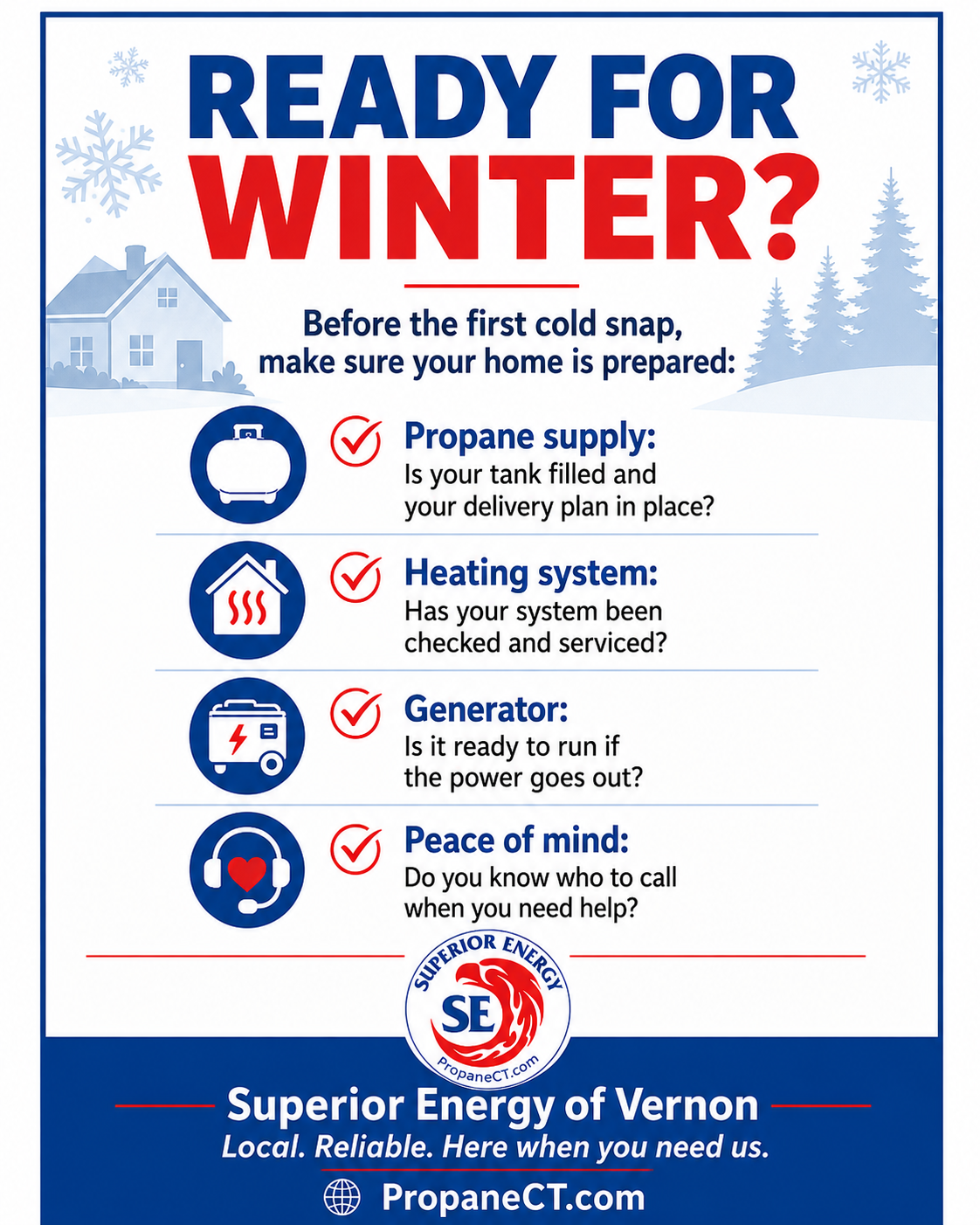
Before the first cold snap, take a look at your home. Make sure your heating system is ready. Think through what you would do if the power went out for a day or two. If something has been sitting on your “I’ll get to it before winter” list, September is probably the time to get to it.
None of that is dramatic.
That is the point.

Good energy planning should be boring. It should happen before the storm warning, before the first freezing night, before the relatives arrive, and before the weather report becomes everyone’s whole personality.
Because when winter finally shows up, peace of mind is not complicated.
It is a warm house. Hot water. A refrigerator that stays cold. A generator that works when you need it. And, hopefully, a holiday meal that does not end with everyone eating sandwiches by flashlight.
That is what being prepared looks like in real life.
Get Your Home Ready Before the First Cold Snap
Superior Energy helps homeowners across Connecticut prepare for winter with propane delivery, heating support, generator fuel planning, electrical service, and local help when it matters most.
Have questions about your propane delivery plan, generator setup, or winter energy needs?
Contact Superior Energy at 860-875-6221.